
Discovering Kopi Kukang and the Beauty of Kemuning Forest with SIMBA 2023

There was something different in front of the Auditorium of the Faculty of Forestry, Universitas Gadjah Mada, on Wednesday morning (08/11/23). Tables lined up with baristas behind them and cups of “Kopi Kukang” served in front created a unique atmosphere that day. Several people were enthusiastically queuing to enjoy manually brewed Kopi Kukang, adding a vibrant energy to the morning. The Javan Wildlife Institute (JAWI) had the opportunity to serve and introduce Kopi Kukang at the Indonesia–Malaysia Symposium for Bioacoustics (SIMBA) 2023, which was held over three days. In addition, we also had the opportunity to introduce Kemuning Forest through a field trip attended by 10 symposium participants.
Kopi Kukang: Robusta from the natural habitat of the Javan slow loris

Kopi Kukang Booth at SIMBA 2023
With a lively and cheerful atmosphere, SIMBA participants not only enjoyed a delicious cup of coffee but also received insights into conservation initiatives for Kemuning Forest. In an era where coffee shops have become a magnet for young people to gather or work, coffee is no longer just a source of energy—it tells a compelling story. We presented Kopi Kukang as a representation of robusta coffee rich in narrative, particularly in the context of conserving the habitat of the Javan slow loris.
“Kopi Kukang” originates from coffee plantations located within the natural habitat of the Javan slow loris, specifically in Kemuning Forest, Temanggung. The uniqueness of this coffee lies not only in its flavor but also in the sustainable principles applied in its cultivation. The shade-grown coffee method not only enhances coffee quality but also represents a tangible effort to support biodiversity conservation.
The use of sustainable systems in coffee cultivation not only helps protect the Javan slow loris but also empowers local communities. By maintaining harmony between coffee farming and wildlife, “Kopi Kukang” becomes a concrete symbol of how humans and nature can work together to sustain ecosystems.
Every sip of “Kopi Kukang” is not only satisfying but also invites us to participate in broader conservation efforts. By choosing this coffee, we contribute to environmental sustainability and the protection of wildlife, particularly the Javan slow loris—a small step with a significant impact in preserving the natural beauty and biodiversity of Kemuning Forest in Temanggung Regency.
Exploring the Natural Beauty and Culture of Kemuning Forest
Not only as a habitat for the Javan slow loris, this approximately 400-hectare forest also offers rich potential and stories. Its stunning natural beauty, well-preserved local wisdom, and vibrant culture make Kemuning both a forest and a village worth exploring. The beauty of Kemuning Forest has already been experienced by SIMBA participants who joined a two-day, one-night exploration.
Guests consisting of both local and international visitors explored the forest trails of Kemuning. Together with the local community, they experienced daily life in Kemuning, such as observing honey harvesting, making palm sugar, and exploring the forest’s biodiversity. Despite the short duration, participants were highly enthusiastic about the journey.
Rural life that still upholds traditions and local wisdom has become a rare phenomenon in many places. Skilled forest honey collectors, smoke rising from palm sugar kitchens, and motorcycles passing through the forest to manage coffee plantations form part of daily life that fascinates visitors. At the palm sugar production site, guests participated in stirring, molding, and tasting their own palm sugar. Similarly, when visiting honey farmers, they tasted honey directly from cultivated beehives.
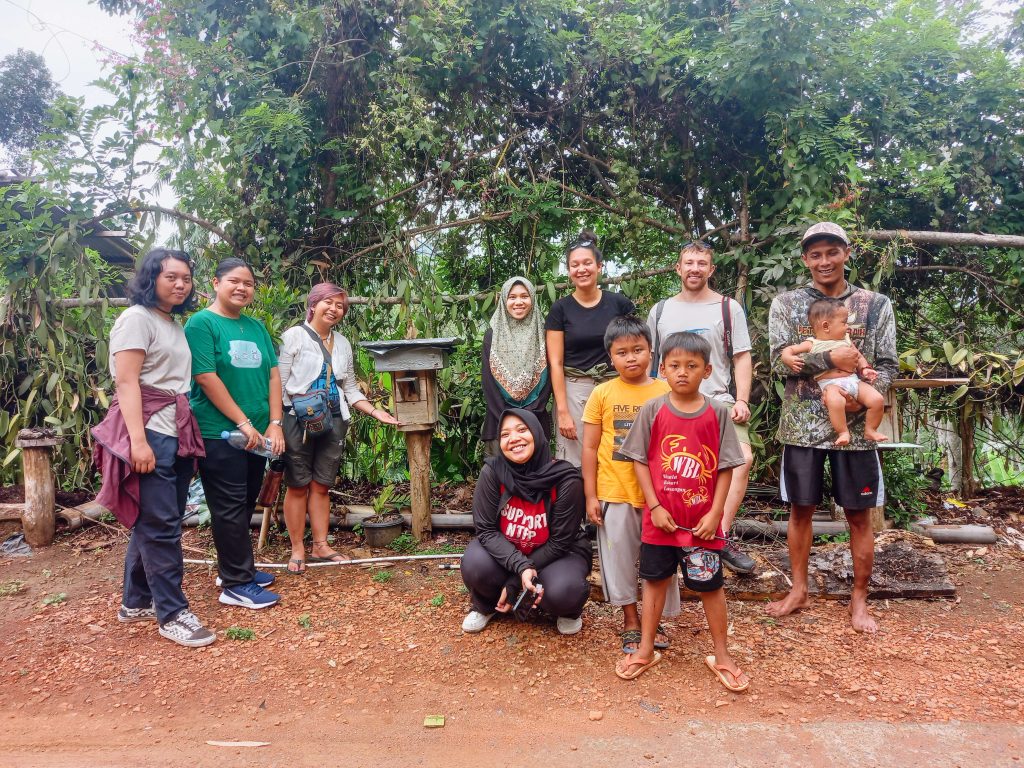
Introduction to Forest Honey with Kang Dayat, a resident of Kemuning Village
Not only the daily life of Kemuning’s people attracts visitors. Visiting on a Saturday night is an ideal time to experience the village. Guests had the opportunity to witness cultural preservation through the warokan dance performed by the youth of Kemuning Village. Regardless of age, young people and villagers unite with a shared goal: preserving their ancestral culture. Visitors enthusiastically joined the dance, accompanied by gamelan music and traditional singing (sinden), which was a unique experience, especially for international tourists.
The night journey continued into the dark forest of Kemuning in search of one of its elusive inhabitants—the Javan slow loris. This species is a major attraction for wildlife enthusiasts. Using red-light flashlights, guests scanned the forest canopy. Although the slow loris was not found, other nocturnal animals such as Sunda flying lemurs, flying squirrels, snakes, and frogs provided a satisfying experience.

Night Observation by Wildlife Tourism Participants
With its abundant potential, Kemuning Village can be further developed, particularly in the context of special-interest tourism. Enhancing and diversifying income through tourism is expected not only to boost the local economy but also to maintain the balance between social life, nature, and culture that has been well preserved over time.

 Oleh Admin

