
Focus Group Discussion II: Biodiversity Management Master Plan for Central Java Province 2026-2030

The Javan Wildlife Institute (JAWI) attended the Phase II Focus Group Discussion (FGD) for the drafting of the Biodiversity Management Master Plan (RIP Kehati) for Central Java Province, period 2026–2030. Held in Semarang over two days (Feb 24–25), the event was organized by the Central Java Provincial Government in collaboration with GIZ-SOLUSI and facilitated by Burung Indonesia. This session followed a series of technical discussions previously held at the regional level, including the Kedu region last November. The provincial forum aimed to formulate a vision, mission, and strategic responses for inclusive and sustainable biodiversity management.
FGD Dynamics and Conditions
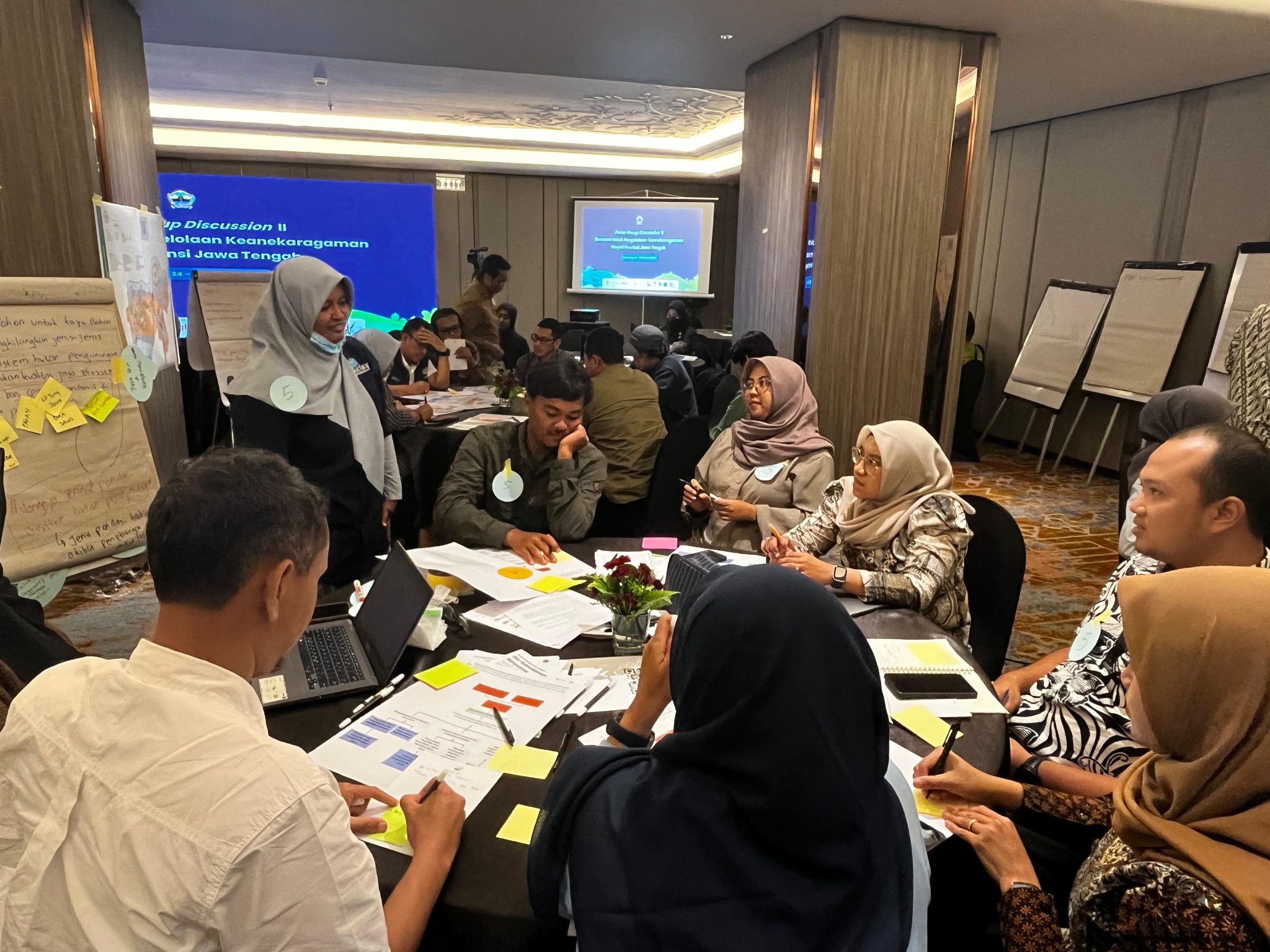
The Phase II FGD served as a consolidation space for various stakeholders, including the Central Java provincial government, academics, Civil Society Organizations (CSOs), local communities, and the private sector. Discussions focused on identifying desired changes, developing strategic pathways, alternative scenarios, and formulating a collective long-term vision. These points referenced core biodiversity management issues, including State, Pressure, and Drivers identified in the Phase I regional sessions.
In the context of the Kedu Region, several crucial issues surfaced:
-
Land Conversion: Agricultural and residential expansion causing habitat fragmentation.
-
Horticultural Intensification: High-altitude farming leading to soil erosion and declining water quality.
-
Wildlife Poaching: Persistent threats in Temanggung and surrounding areas.
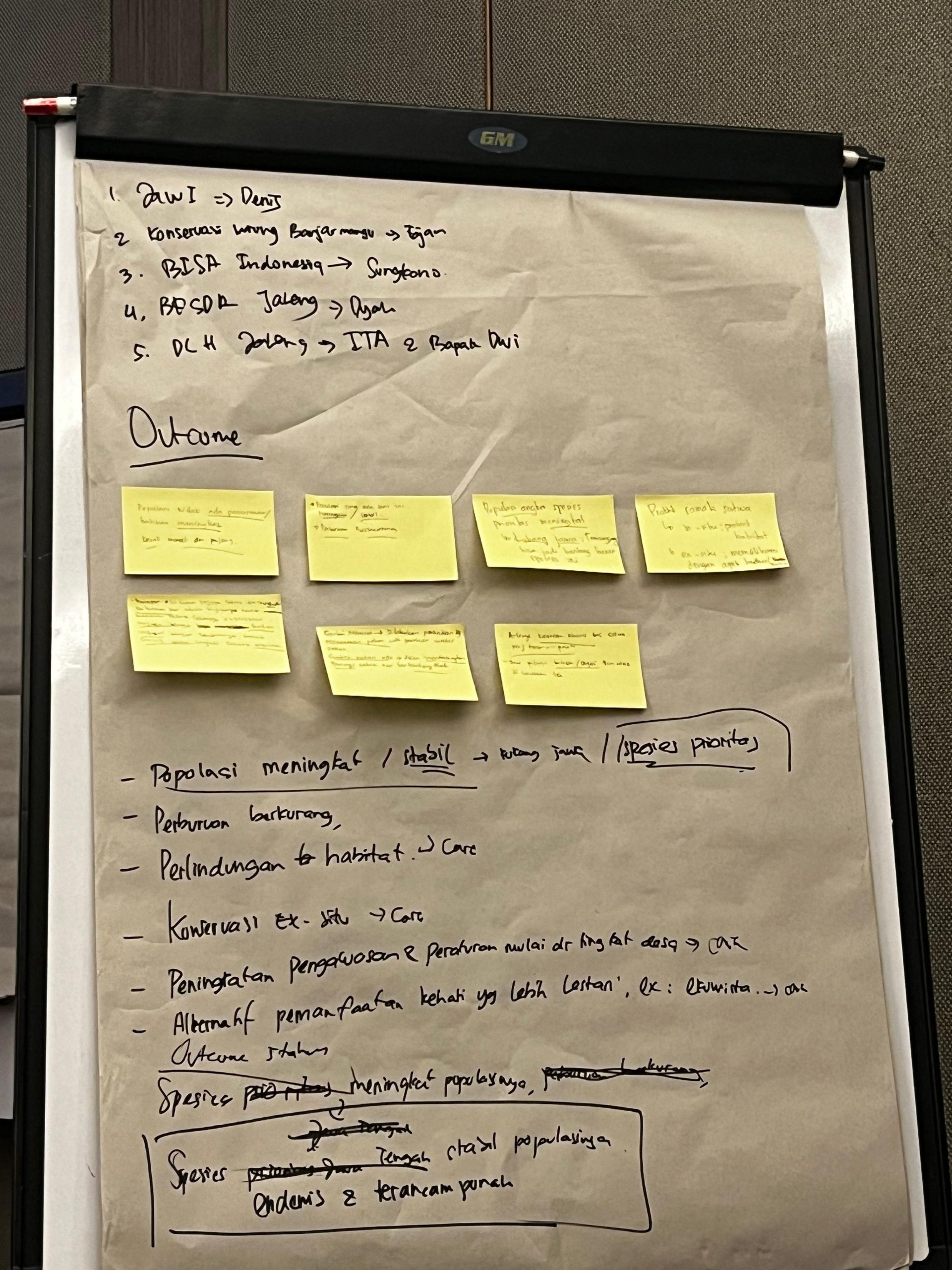
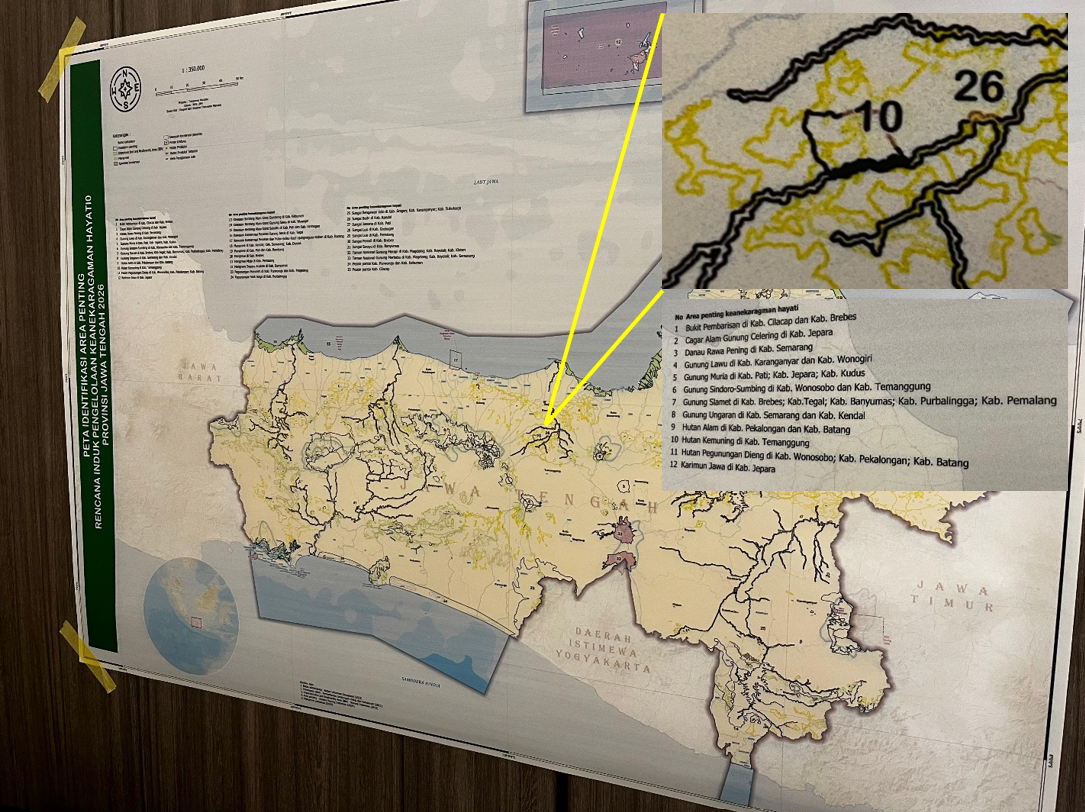
Amidst these issues, JAWI emphasized that ecosystem protection is incomplete without clear advocacy for key species, especially those endemic and endangered. A primary concern raised was the Javan Slow Loris (Nycticebus javanicus). During the discussion, JAWI urged that the priority species listed in the RIP Kehati should not be generic but explicitly name species requiring immediate intervention. Furthermore, the Kemuning Forest in Temanggung Regency was officially noted as a significant biodiversity area in Central Java, strengthening its position in provincial conservation priorities.
Future Expectations and Strategic Goals
For JAWI, participating in FGD II was more than a formality; it was a strategic effort to ensure the RIP Kehati 2026–2030 document directly impacts the grassroots level, specifically Kemuning Village.
Strategic expectations for Kemuning Village include:
-
Strengthening Protection Status: Integrating Kemuning Forest into landscape-based conservation schemes and bolstering habitat protection policies.
-
Mitigating Wildlife Poaching: Increasing community education regarding illegal hunting and trade, supported by community-based monitoring programs.
-
Inclusive Conservation Models: Opening avenues for community-based conservation, biodiversity-friendly agroforestry, and ecotourism developed within ecological carrying capacities.
FGD II serves as a vital momentum to align provincial policy with field realities. For JAWI, this process is a milestone in ensuring that Kemuning Village is not merely a name in a document, but a model for participatory and sustainable biodiversity management. The RIP Kehati 2026–2030 is expected to be more than a planning document—it must be a concrete foundation for guarding the Sindoro–Sumbing landscape, including Kemuning Forest, as one of the last bastions of biodiversity in Temanggung.

 Oleh Admin

