
Songbird Conservation Discussion: Sharing Lessons and Synergizing Efforts

Efforts to conserve songbirds in Indonesia continue to face increasingly complex challenges, ranging from hunting pressure to inter-regional trade. In this context, JAWI participated in a discussion titled “Songbird Conservation: Sharing Lessons and Synergizing Efforts” organized by Burung Indonesia in Bogor (30/03). This forum served as a meeting space for various stakeholders, from government institutions to non-governmental organizations (NGOs), to discuss developments and opportunities in songbird conservation efforts in Indonesia, particularly on the island of Java. The event began with opening remarks from the organizers, followed by a presentation on the global status of bird conservation. The discussion then focused on current issues of hunting and trade of songbirds, including their scale and impacts across various landscapes in Java, as well as findings from the broader Asian region. It also reviewed the effectiveness of various conservation actions implemented and lessons learned from the field.
Sharing Practices at the Local Level
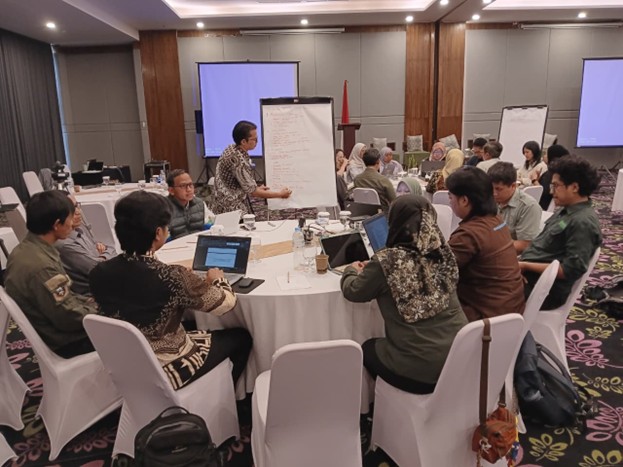
The atmosphere of the Focus Group Discussion (FGD) with participating NGOs, including Bisa Indonesia, Kanopi Indonesia, Endemik Indonesia, Biodiversity Society, Javan Wildlife Institute (JAWI), Peka Muria, Konservasi Burung Banjarmaju, Sanggabuana Conservation Foundation, and Gembira Loka Zoo.
On this occasion, JAWI, represented by Febrian Edi Nugroho, actively contributed through a Focus Group Discussion (FGD) session alongside other NGOs by sharing experiences from its assisted village in Kemuning, Temanggung. We presented ongoing efforts to reduce community dependence on hunting as a source of income by developing alternative livelihoods, such as optimizing coffee commodities and promoting special-interest tourism in Kemuning Village. During the FGD, we also emphasized the importance of establishing village regulations as a legal foundation to protect wildlife from hunting practices, both by local communities and external actors.
The roles of NGOs appeared highly diverse and complementary in advancing songbird conservation efforts. Their contributions include raising public awareness, developing alternative livelihoods such as coffee, tourism, and photography to reduce hunting pressure, and educating younger generations. Additionally, NGOs play a role in stakeholder mapping and identifying natural resource potential, as well as strengthening policies through advocacy, village regulation development, and enhancing data-driven bargaining power. These efforts are further reinforced through communication strategies such as public campaigns, information dissemination, and the production of educational media, enabling conservation initiatives to reach wider audiences and generate sustainable impacts.
Challenges and Efforts in Songbird Conservation
.jpg)
Presentations and discussions by the speakers.
Interestingly, hunting emerged as a central issue in the discussion, reflecting a growing trend that now includes small bird species often captured as “master birds” (training birds for competitions). In fact, illegal hunting is now considered to surpass deforestation as the primary threat, contributing to the phenomenon known as Silent Forest Syndrome, where forests appear intact but lose their ecological functions due to the decline of birds as agents of regeneration and pest control. One striking example is the Javan pied starling (Gracupica jalla), which is now extinct in the wild.
BirdLife International also presented findings from a trade review in Southeast Asia. The presentation highlighted that hunting is not merely a domestic crisis in Indonesia but involves broader regional networks. There are indications of cross-border trade, such as weak border enforcement facilitating trade between Thailand and Malaysia, and Cambodia using Vietnam as a primary export destination. The massive scale of these issues at the global level underscores the need for stronger multi-stakeholder collaboration in addressing them.
In addition to hunting and trade issues, the discussion also addressed the effectiveness of in situ conservation actions conducted with local communities across three main landscapes (Patuha, Menoreh, and Mount Slamet). This approach integrates bird protection with village governance, habitat conservation, and livelihood strengthening. Various strategies, from public education and participatory mapping to the involvement of former hunters, demonstrate that conservation programs can encourage communities not only to recognize important species but also to value birds as ecological, social, and economic assets. This approach has also contributed to bird population recovery, as indicated by increasing encounter rates in several program locations.

 Oleh Admin

